Fraxinus excelsior
Common name:
Euopean Ash
Common Ash
Pronunciation:
FRAKS-i-nus ek-SEL-si-or
Family:
Oleaceae
Genus:
Type:
Broadleaf
Native to (or naturalized in) Oregon:
No
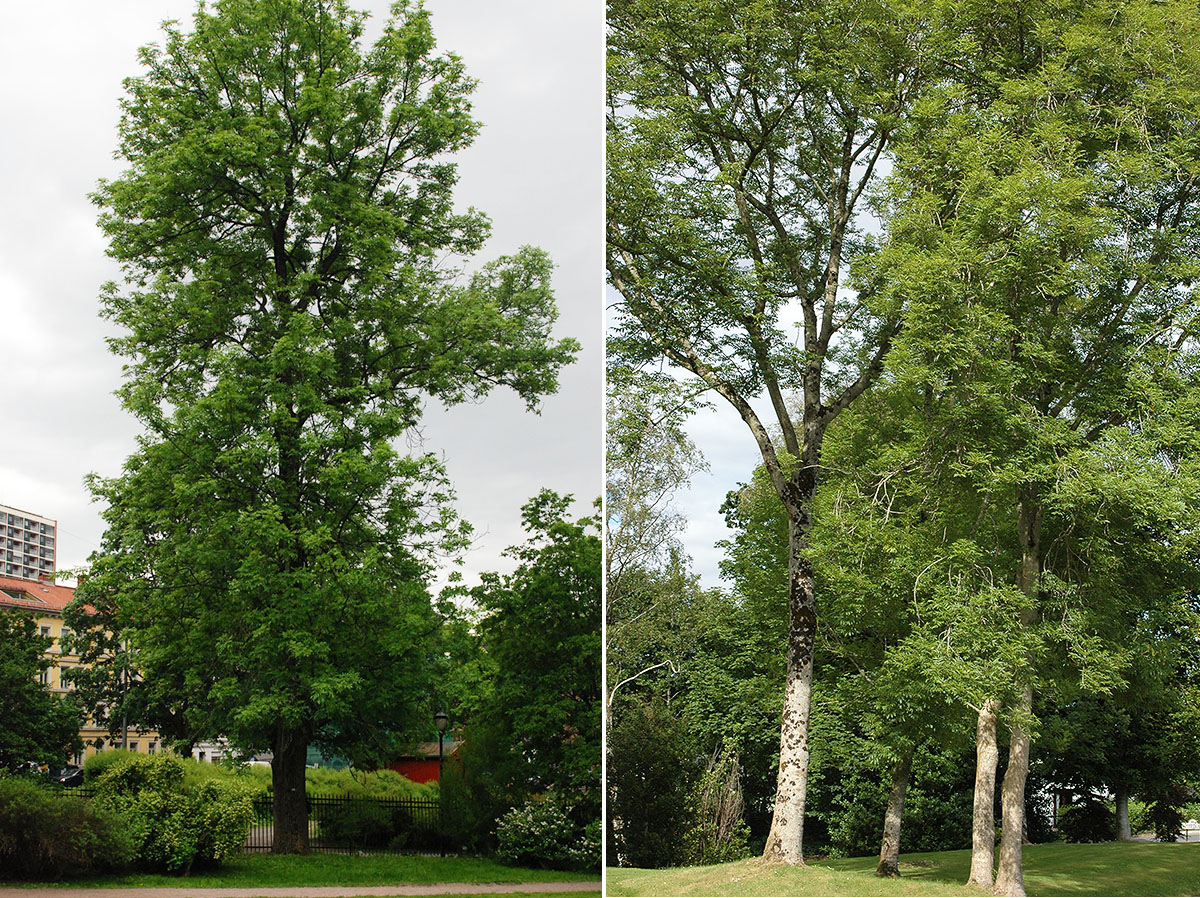
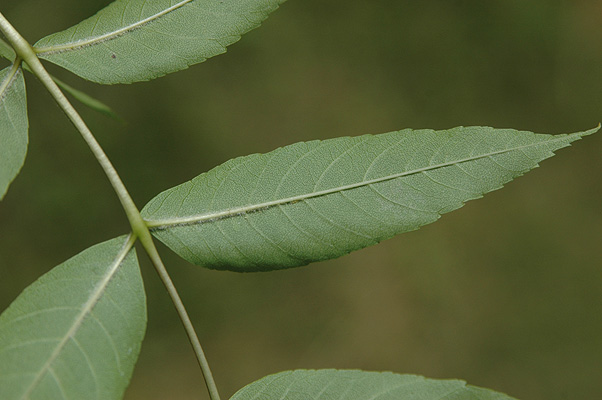
- Broadleaf deciduous tree, to 85(100+) ft [~25(30+) m] high and an equal or even somewhat greater width, round headed and broad spreading. Dormant buds black. Leaves opposite, pinnate compound, 25-30 cm long, 7 to 11 leaflets, sessile, each 5-10 cm long, ovate-oblong to ovate-lanceolate, tip long acuminate, base wedge-shaped (cuneate), margin serrate, dark green above and lighter green below, soft, shaggy hairs (villous) on midrib below; fall color green to yellow. Winter buds black or nearly so. Flowers are without petals, in dense purplish clusters and open before the leaves, not ornamentally important; there may be male and female flowers on the same or separate trees or even bisexual flowers on the same tree. Fruit (samara) winged, 2.5-4 cm long, tip obtuse to emarginate to acute.
- Sun.
- Hardy to USDA Zone 5 Native to British Isles, Europe and Caucasus, cultivated for centuries. One of the largest deciduous trees in Europe.
- Alert: An invasive, non-native, insect pest, the Emerald Ash Borer (EAB) is present in Oregon and in much of the easthern U.S. The larvee of this pest feed on the inner bark of ash trees native to North America and Eurpoe, disrupting nutrient and water transport, which often results in tree death. For more information on this potentionally devistataing insect pest, click on Fraxinus in the Genus listing above.
- excelsior: higher, taller
- Not often used in landscapes in North America. However some of the yellow-leafed selections are exceptions. Two such selections are: 'Gold Cloud' and Golden Desert®
Click image to enlarge
-
plant habit
-
leafy shoots
-

leaf
-

leaflets, underside
-
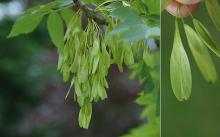
immature fruit cluster and fruit
-

trunk, bark
-
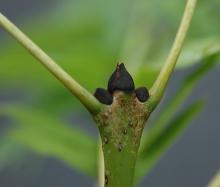
buds