Fraxinus americana Autumn Purple®
Common name:
Autumn Purple Ash
Pronunciation:
FRAKS-i-nus a-mer-i-KA-na
Family:
Oleaceae
Genus:
Synonyms:
'Junginger'
Type:
Broadleaf
Native to (or naturalized in) Oregon:
No
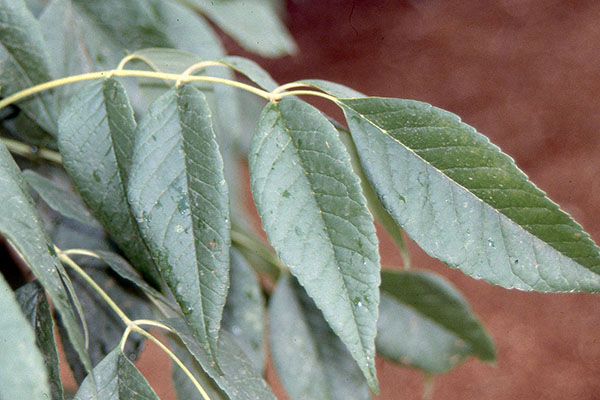
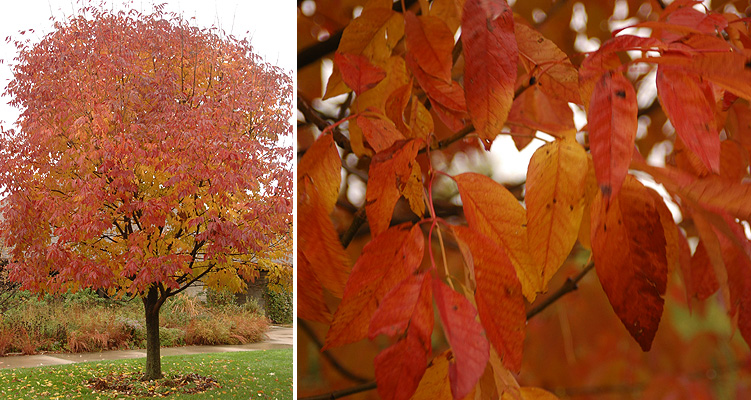
- Deciduous tree, to 40 ft and 25 ft wide (12 × 7.5 m), rapid growing, dense, rounded habit. Leaves opposite, pinnately compound, leaflets somewhat smaller than the species type, dark green and glabrous above. Fall color may include mottled orange-yellow, deep purple or mahogany. Seedless, a male.
- Sun. Growth may be best in deep, moist, well-drained soil, however, fall color better in full sun.
- Hardy to USDA Zone 4 Discovered at the University of Wisconsin. Two views of its discovery: (1) "G. William Longenecker (1899-1969), a well-known professor of horticulture at the University, recognized this staminate [male] tree for its good form and spectacular autumn foliage. Longenecker worked with McKay Nursery of Wisconsin and Cole Nursery of Ohio to trademark and make available this official cultivar (Wisconsin Dept. Natural Resources). (2) Discovered at the University of Wisconsin by Karl Junginger (1905-1991) of McKay nursery, Waterloo, Wisconsin, it was introduced in 1956 (Jacobson, 1996). Apparently the cultivar name is 'Junginger' and for a time the tree was sold under this name. The tree was then trademarked Autumn Purple® on June 23, 1974, and then marketed under this name.
- Autumn Purple® is a popular seedless (male) selection of F. americana. Another popular seedless ash cultivar is 'Marshall’ a male selection of F. pennsylvanica, compare these two popular ash selections.
- Alert: An invasive, non-native, insect pest, the Emerald Ash Borer (EAB) is present in Oregon and in much of the easthern U.S. The larvee of this pest feed on the inner bark of ash trees native to North America and Eurpoe, disrupting nutrient and water transport, which often results in tree death. For more information on this potentionally devistataing insect pest, click on Fraxinus in the Genus listing above.
- Corvallis: north side of Central Park on Monroe Ave; also on 3rd St. between Adams and Washington Aves.
- Oregon State Univ. campus: two trees at each entrance to the Washington Ave. parking lot east of 11th St.
Click image to enlarge
-

plant habit
-

leaves
-

leaflets
-

plant habit, early fall
-

plant habit, early fall
-

leaves, fall
-

plant habit and foliage, fall
-

plant habit and foliage, fall
-

variation in leaf and leaflet color
-

trunk, bark
-

terminal buds, late fall
-

lateral bud and leaf scar, late fall