Paulownia tomentosa
Common name:
Empress Tree
Royal Paulownia
Pronunciation:
paw-LO-nee-a to-men-TO-sa
Family:
Scrophulariaceae
Genus:
Type:
Broadleaf
Native to (or naturalized in) Oregon:
No
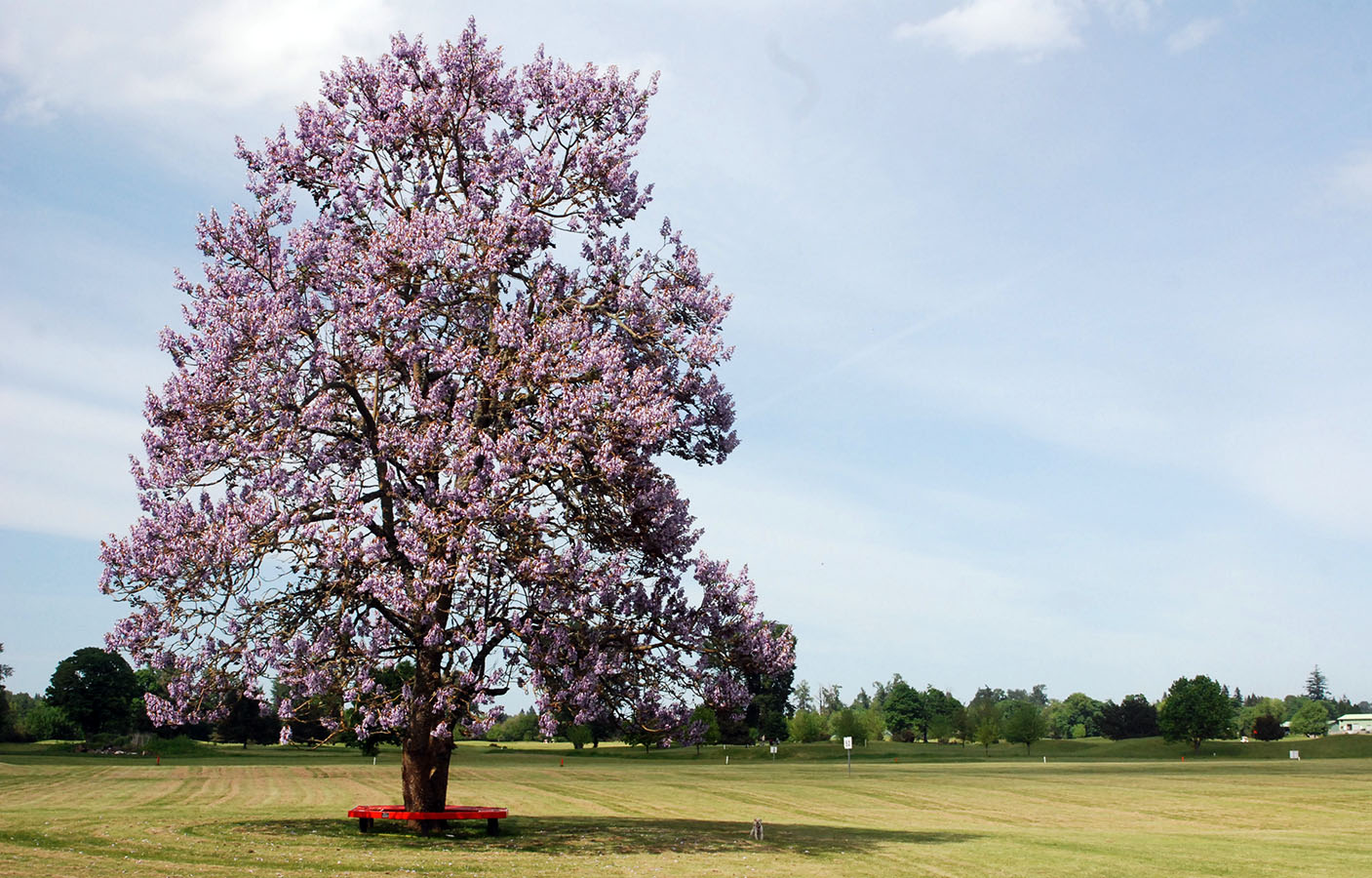
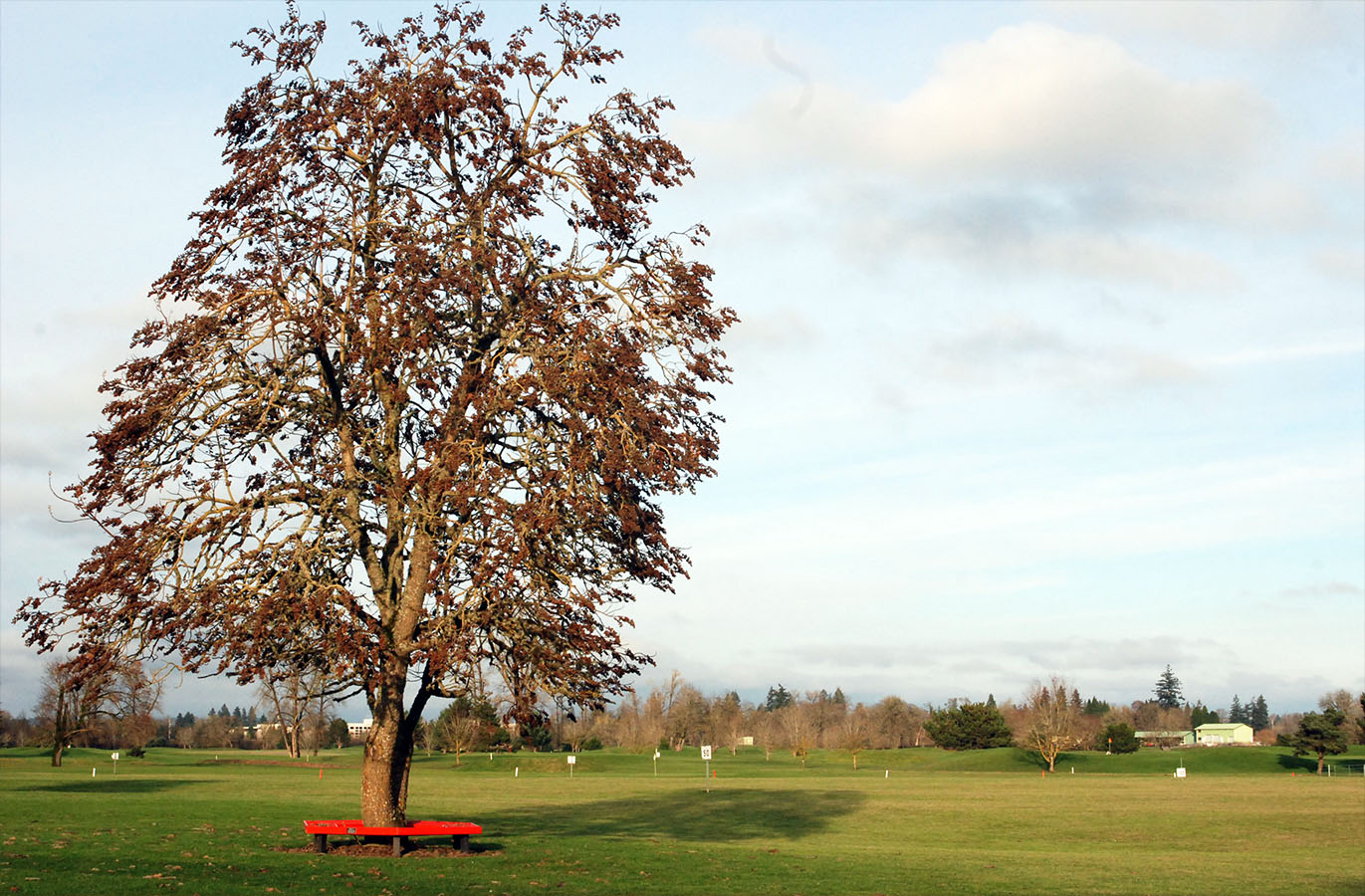
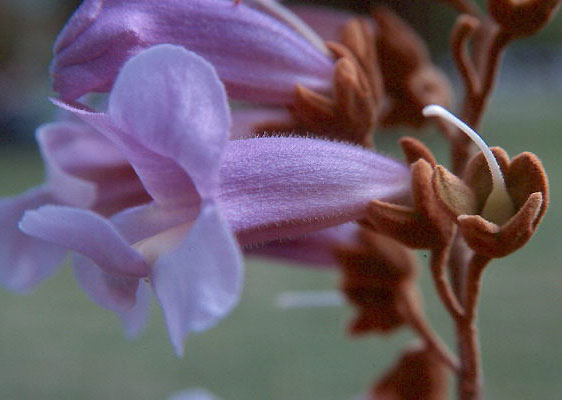
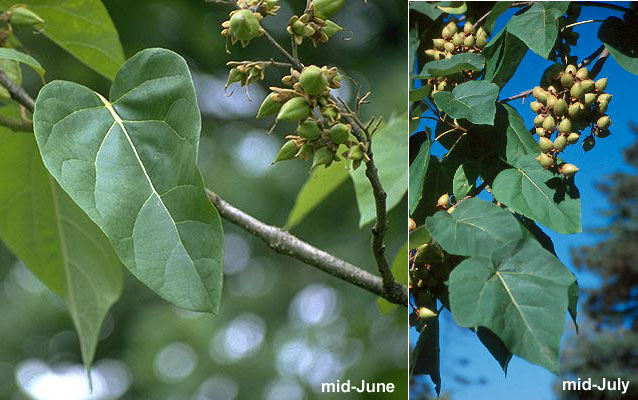
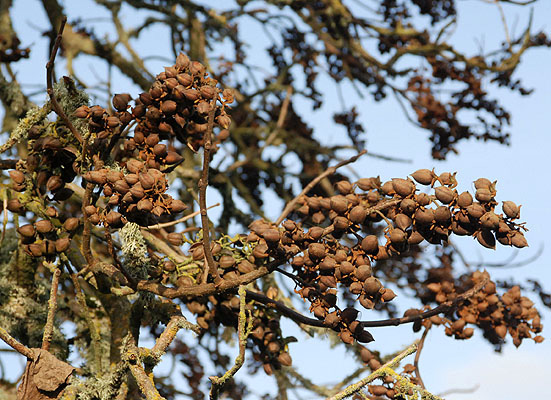
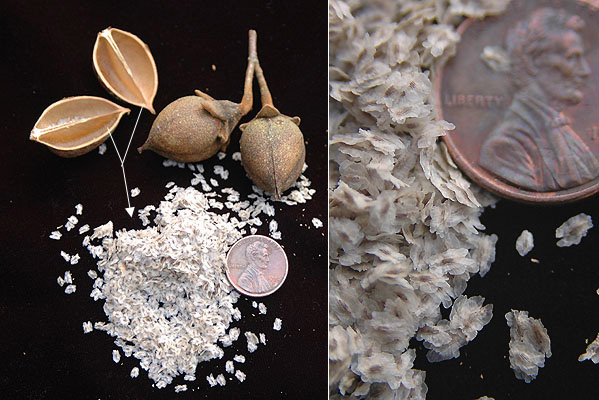
- Broadleaf deciduous tree, 30-60 ft (9-18 m) tall, fast growing. Leaves opposite, simple, large broad-ovate to ovate (10-25 cm long and wide), unlobed or shallowly 3-lobed, margin entire, dark green above, dense woolly beneath (i.e., tomentose, hence tomentosa). Flowers pale violet, foxglove-type, in 20-30 cm long panicles, vanilla-scented, appear (May) before leaves. Brown fruits, 2-valved capsules, 3 cm long, persist during the winter. Each fruit contains as many as 2000 small winged seeds.
- Sun to part shade, not particular about soil or conditions. A tree produces a large number of seeds and seedlings will grow almost anywhere, so it can become an invasive pest.
- Sometimes grown as a large-leafed shrub by cutting back to near ground level after leaf drop. When grown this way it does not flower or fruit. It is also possible to cut it back at any height and remove the first several axillary buds (the bud in the leaf axil) in order to prevent side branches, producing a single shoot which may reach a height of over 30 ft (9.1 m).
- Hardy to USDA Zone 5 Native to China. Escaped from cultivation and considered an invasive species. It is now found in the U.S. from southern New York to Georgia; an invasive tree in southern forests. In the Pacific Northwest, Paulownia do not behave invasively, probably due to our cooler climate (University of Washington Botanic Gardens, 2014).
- tomentosa: densely wooly; with matted hairs (a reference to the underside of the leaves).
- Oregon State Univ. campus: two trees east of Community Hall, on either side of sidewalk.
Click image to enlarge
-
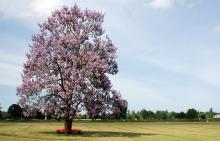
plant habit, late spring flowering
-
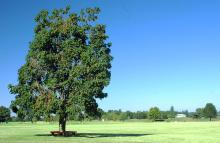
plant habit, summer
-
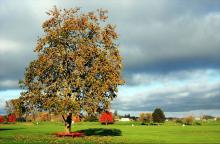
plant habit, fall
-
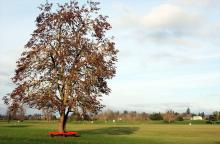
plant habit, winter
-
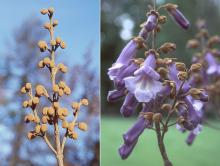
flower buds (winter) and emerging flowers (spring)
-
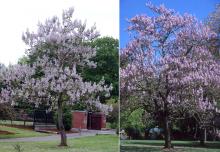
plant habit, flowering
-
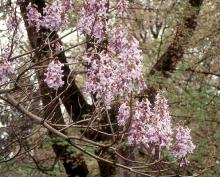
flowering branches
-
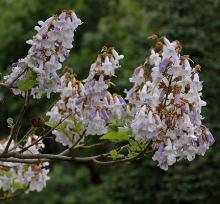
flower clusters
-
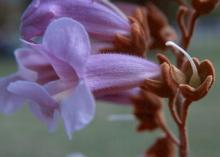
flower
-
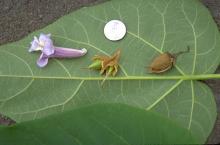
leaf, flower, fruit
-
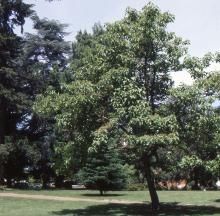
plant habit, summer
-
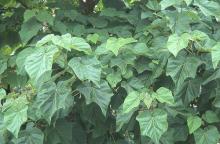
leaves
-
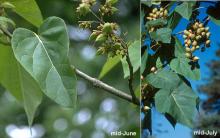
leaves and maturing fruit
-
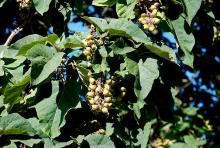
fruit and leaves, late summer
-
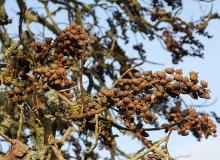
fruit, winter
-
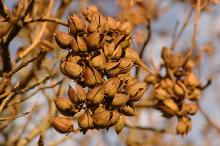
open fruit clusters, winter
-
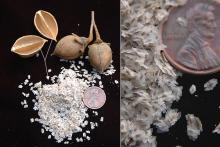
fruit and seeds
-
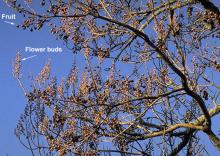
fruit and immature flower clusters, winter
-
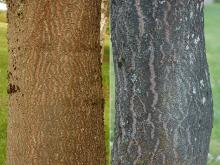
trunk, bark
-
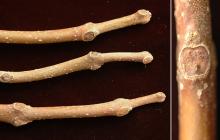
winter twigs, buds